

For over 2,000 years, traditional practices have revered Reishi mushrooms as the ultimate tonic supporting healthy systemic vitality. Historically known as the "Mushroom of Immortality," it is one of the most sought-after functional fungi in the world.
However, as the popularity of mushroom supplements has exploded, so has the confusion. Shoppers looking for immune and vitality support are often bombarded with products simply labeled "Reishi," but not all of these products contain the specific compounds they are looking for.
If you are confused about the difference between Reishi vs. Red Reishi, you are not alone. Here is our insider's look at why species, growth stage, and whole-mushroom sourcing matter when choosing a high-quality mushroom supplement.
The "Reishi" Catch-All: A Labeling Loophole
The first thing to understand is that "Reishi" (or Lingzhi) is a broad, generic term, much like the word "apple." In the supplement industry, it is frequently used to describe several different species within the Ganoderma genus.
For example, many mass-market brands quietly use Black Reishi (Ganoderma sinense) or blend it into their products. While Black Reishi is a valid functional mushroom, it is cheaper and has a much milder taste than Red Reishi (Ganoderma lucidum) because it contains significantly lower levels of triterpenes—the exact compounds most people are paying for.
Even worse, the "Reishi" label is often slapped onto cheap mycelium (the root-like structure of the fungus) that is grown on bags of grain or oats for just 30 days. Because it never matures into a physical mushroom, it completely lacks the complex chemistry found in nature.
The Powder Substitution Problem
How do so many inferior species end up in consumer products? The answer lies in choices manufacturers make in their supply chain.
A vast majority of supplement companies do not extract mushrooms, which is the most costly path to making mushroom dietary supplements. They buy cheap bulk, pre-pulverized mycelium or mushroom powders from overseas suppliers for speed and cost savings. Once a mushroom is ground into a fine brown powder, however, visual identification becomes impossible and require expensive laboratory DNA testing these supplement makers do not do.
This creates a massive blind spot in the industry that fraudulent suppliers are eager to take advantage of. It allows suppliers to easily substitute cheaper, faster-growing Ganoderma species—or heavily dilute the powder with grain starch—knowing the brand buying the powder will likely never notice the difference.
The DNA Studies Confirming Massive Substitution
In recent years, several independent scientific bodies have tested commercial "Reishi" supplements, and the failure rates are staggering:
-
The U.S. Pharmacopeia / Scientific Reports (2017): A landmark biochemical study analyzed 19 different "Reishi" supplements purchased in the United States. They found that only 26% of the products actually contained true Reishi (matching the triterpene profile of Ganoderma lucidum). The rest contained substituted species or were primarily just starchy grain fillers.
-
Frontiers in Microbiology (2018): In a massive DNA barcoding study of commercial Reishi products, researchers tested 20 manufactured pills, teas, and powders. They found that suppliers were substituting cheaper, easier-to-grow species like Ganoderma applanatum (Artist's Conk), G. sinense (Black Reishi), and G. sessile.
- The 2025 Market Audit: A recent molecular identification study of 84 commercial Ganoderma batches found 16 completely different adulterants mixed into the supply chain, noting that the vast majority of tested samples did not match the ingredients on their own labels.

The Red Reishi Difference: Verification You Can See and Taste
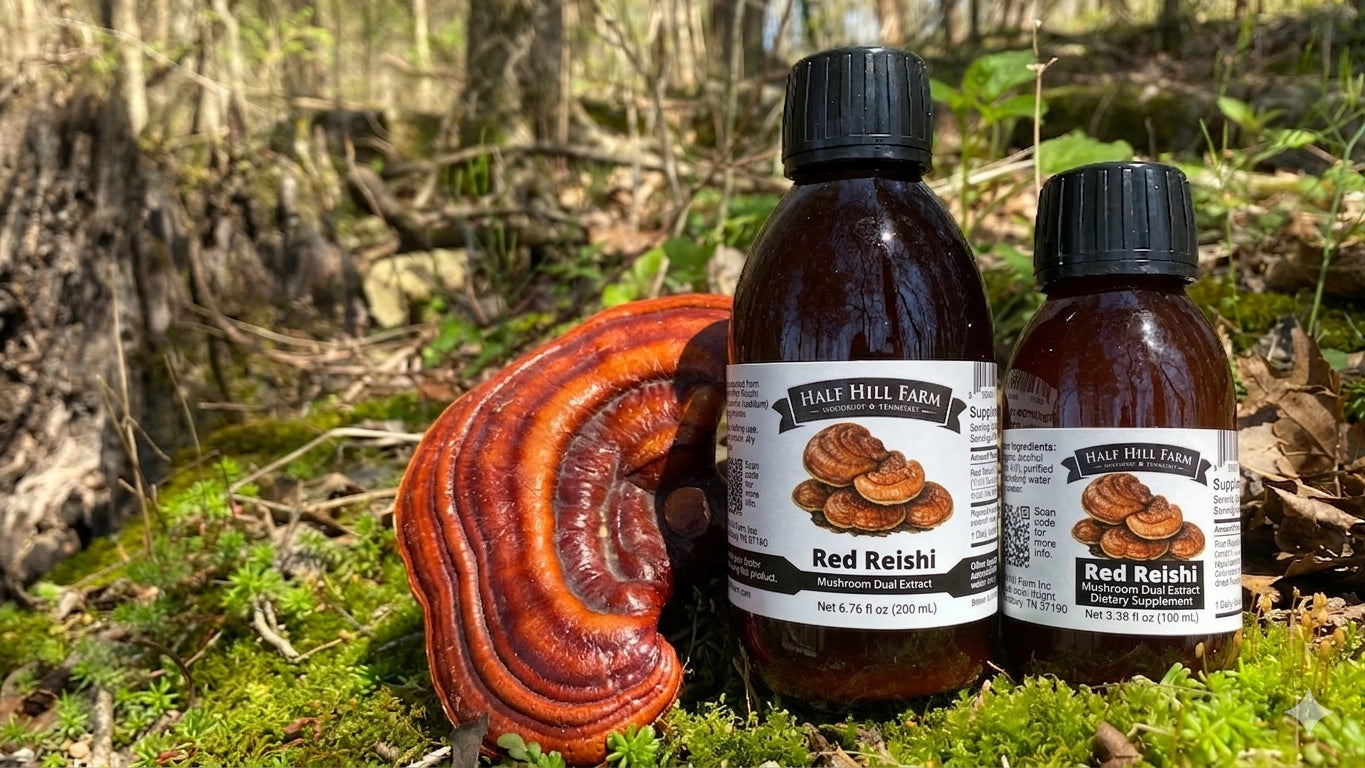
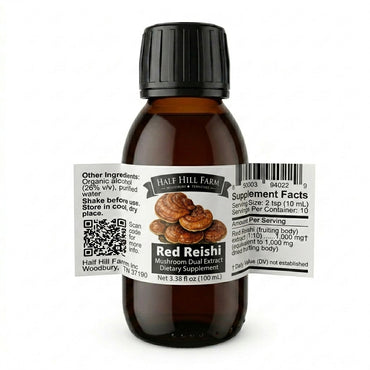
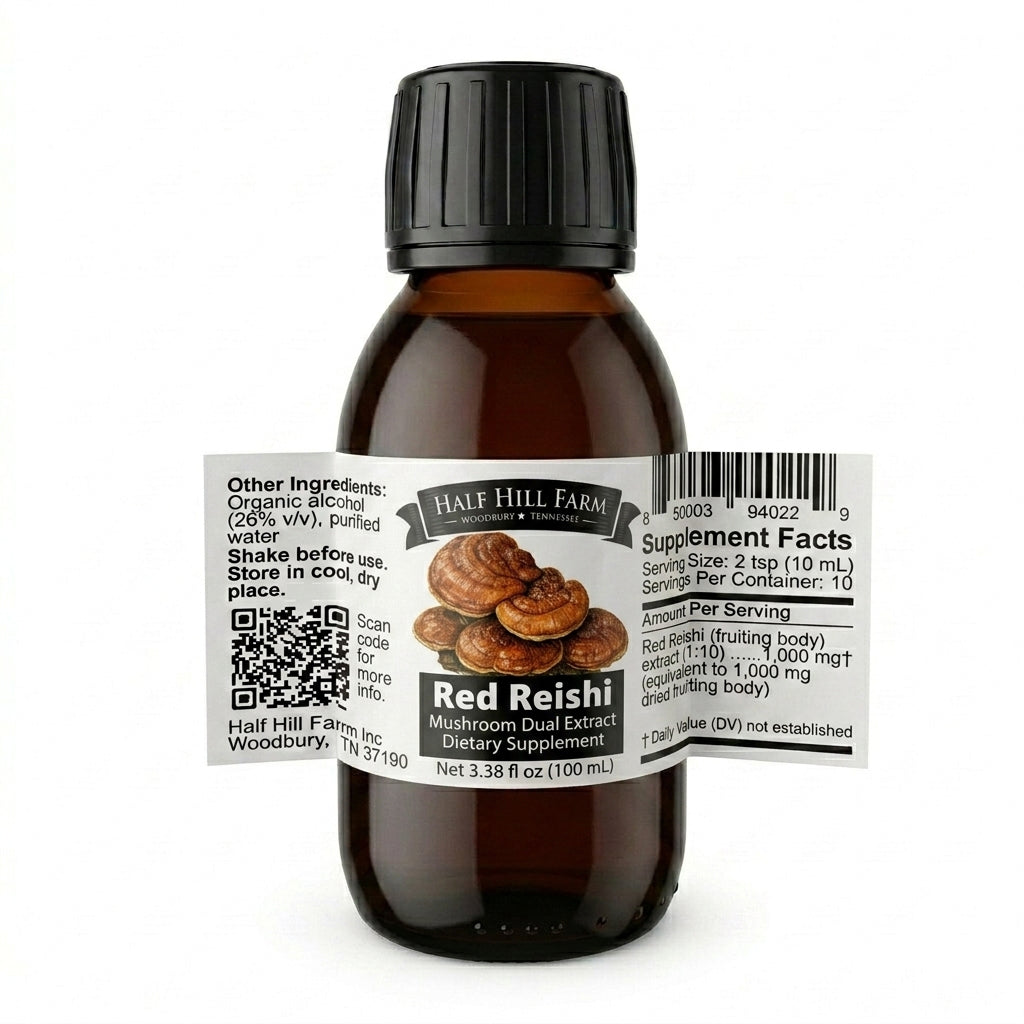
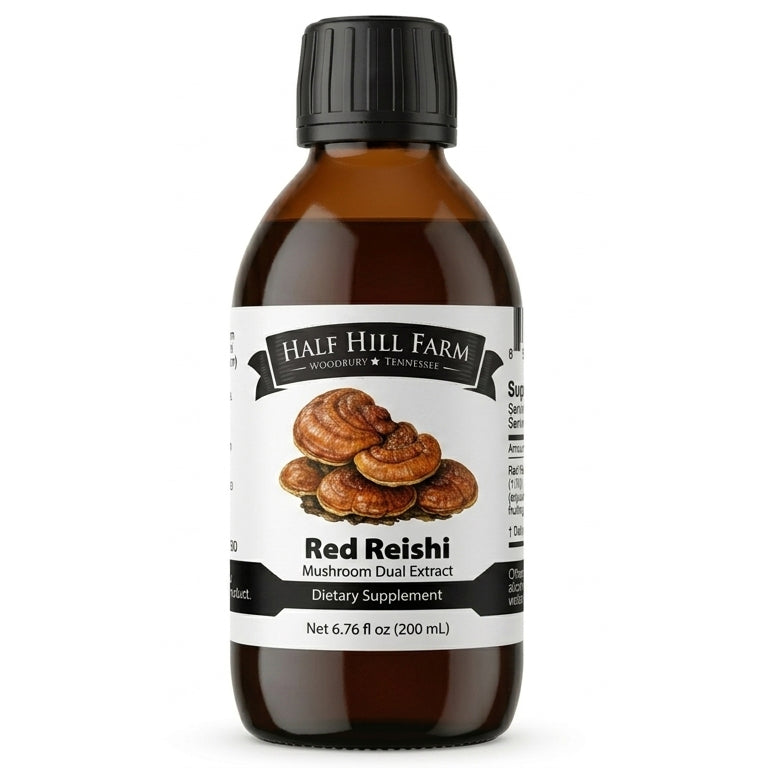
This is exactly why Half Hill Farm uses U.S. grown, fully mature mushrooms instead of cheaper pre-powdered materials. We only source whole, fully mature, U.S. grown, certified organic Red Reishi (Ganoderma lucidum) fruiting bodies. This ensures the identity, purity and strength of our Red Reishi mushroom dual extract matches the consumer's expectation.
By handling the whole mushroom, we can perform strict organoleptic (sensory) testing to definitively verify the species before extraction begins. This step simply cannot be done by mushroom supplement makers when their mushroom ingredient arrives as a powder.
-
The Visual Test: True Red Reishi develops a distinct, laccate (varnished) cap that is deep red and woody. It takes months of growth on hardwood to develop this dense structure.
- The Taste Test: Authentic Ganoderma lucidum is intensely, undeniably bitter. This bitterness is not a flaw; it is the ultimate chemical proof of quality.
A Note on Taxonomy and the Mushroom of Immortality: Genetics recently revealed that the historical Asian "Mushroom of Immortality" is technically the species Ganoderma sichuanense, while the name Ganoderma lucidum strictly belongs to a European sister species. However, before DNA testing, the scientific and agricultural communities universally identified the Asian mushroom as G. lucidum. Because of this, decades of clinical studies, global culture banks, and the Chinese Pharmacopoeia permanently adopted Ganoderma lucidum as the commercial standard. The agricultural supply chain never changed the mushroom—they just kept the historical name. When you see G. lucidum on our label, you are getting the exact, authentic Asian organism backed by thousands of scientific studies.
Unlocking the Triterpenes From Mature Mushrooms
That intense bitterness in Red Reishi comes from Ganoderic acids (triterpenes). These highly sought-after, non-polar compounds are only synthesized in significant quantities within the woody tissues of the mature mushroom fruiting body. This is why maturity matters when it comes to mushroom supplements. You simply cannot get them from immature mycelium or substituted species.
Because Red Reishi is as dense as wood, the human digestive system cannot break it down to access these compounds. The mushroom requires a rigorous, multi-step dual-extraction using both hot water and organic alcohol to dissolve the tough chitin walls and capture the full spectrum of triterpenes and water-soluble polysaccharides.
Why Choose Half Hill Farm's Traditional Double Extraction of Fully Mature Red Reishi Mushrooms
When shopping for Red Reishi mushroom supplements, do not settle for a generic "Reishi" label. For an extra layer of certainty, look for products that explicitly state they use 100% fully mature Red Reishi (Ganoderma lucidum) so there are no hidden fillers or starches., and avoid anything made from "mycelial biomass" or vaguely soured mushroom powders.
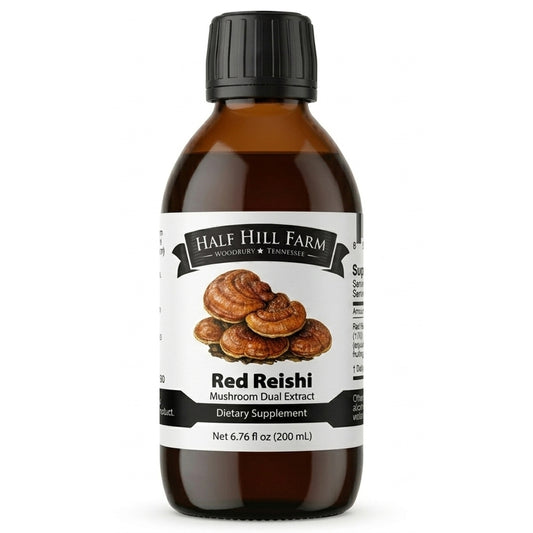
Try supporting your healthy vitality with Half Hill Farm's Red Reishi Mushroom Dual Extract, and experience the uncompromised quality of fully mature, U.S. grown, certified organic, traditionally dual-extracted Ganoderma lucidum.*
----------
Christian Grantham is a founder of Half Hill Farm®, maker of functional mushroom dual extracts since 2012