

Taxonomic Hierarchy of Turkey Tail Mushrooms
- Kingdom: Fungi
- Division: Basidiomycota
- Class: Agaricomycetes
- Order: Polyporales
- Family: Polyporaceae
- Genus: Trametes
- Species: T. versicolor (L.) Lloyd
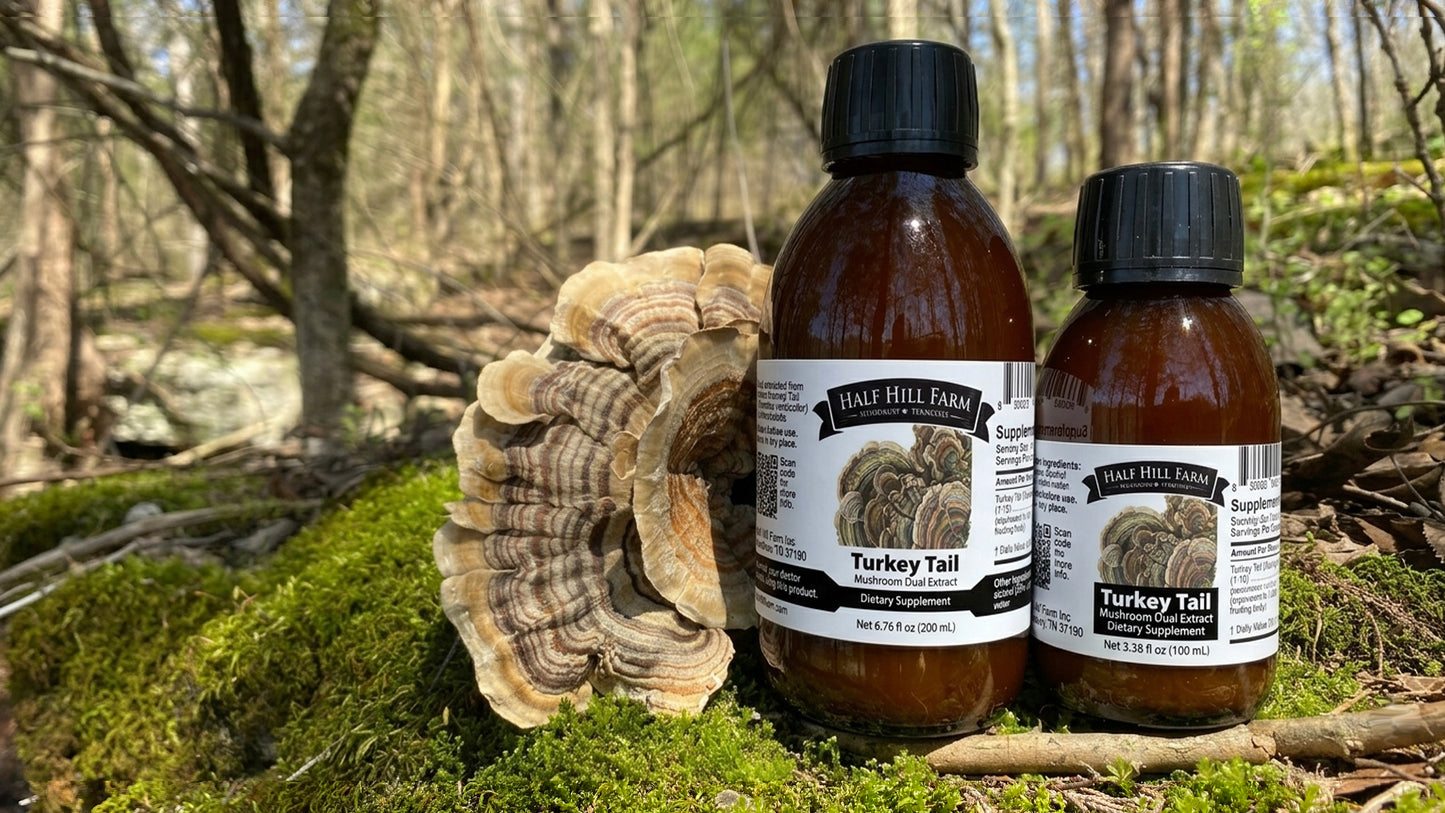
Etymology and Historical Context: Trametes translates to "one who is thin," and versicolor means "of many colors." Commonly known as Turkey Tail, its concentric rings resemble the tail feathers of a wild turkey. In China, it is Yun Zhi (Cloud Mushroom), and in Japan, Kawaratake (Mushroom by the River). Historically, it was a staple in 15th-century Ming Dynasty practices, where it was prized for its "evergreen" nature—surviving on logs through harsh winters where other fungi perished.
Natural Habitat and Distribution: T. versicolor is a prolific wood-decay fungus found globally on downed logs, stumps, and occasionally living branches of nearly all hardwood species. It plays a critical role in forest health by recycling hardwood lignin back into the ecosystem. It is highly adaptable, thriving in both deep old-growth forests and urban woodlots.
Environmental Growth Parameters
- Temperature: Colonization thrives at 21°C–24°C, though the organism is highly frost-tolerant.
- Humidity: Requires consistent 85%–90% RH for the development of its thin, imbricate (overlapping) brackets.
- Light: High indirect light is required for the expression of its vibrant blue, brown, and rust-colored pigments.
Lifecycle: The Fruiting Body Standard
- Mycelium Phase: 14–21 days.
- Mature Fruiting Body: 60–90 days (2–3 months).
- The Difference: The transition from soft, white mycelium to a leathery, "trimitic" bracket takes approximately 60 days of maturation. This is the period during which the fungus concentrates the protein-bound polysaccharides that define the species.
Bioactive MycoPeptides of Turkey Tail Mushrooms: Turkey Tail (Trametes versicolor) is the undisputed king of naturally occurring protein-bound polysaccharides—massive peptide chains physically attached to complex carbohydrates.
-
Polysaccharide-K (PSK): Supports healthy immune cell activity (such as natural killer cells) and promotes optimal, daily cellular defense.*
-
Polysaccharopeptide (PSP): Acts as a prebiotic peptide complex that supports a healthy gut microbiome, which serves as the foundation for the body's overall immune resilience.*
- TVC (Trametes versicolor complex): A glycoprotein matrix that promotes healthy immune modulation, ensuring the immune system remains vigilant without becoming overactive.*
 The Quality Benchmark: Biological complexity in Turkey Tail is tied to the development of the spore-bearing surface. The high-utility protein-bound polysaccharides reach their peak structural complexity only when the bracket has fully expanded and the underside pores have matured.
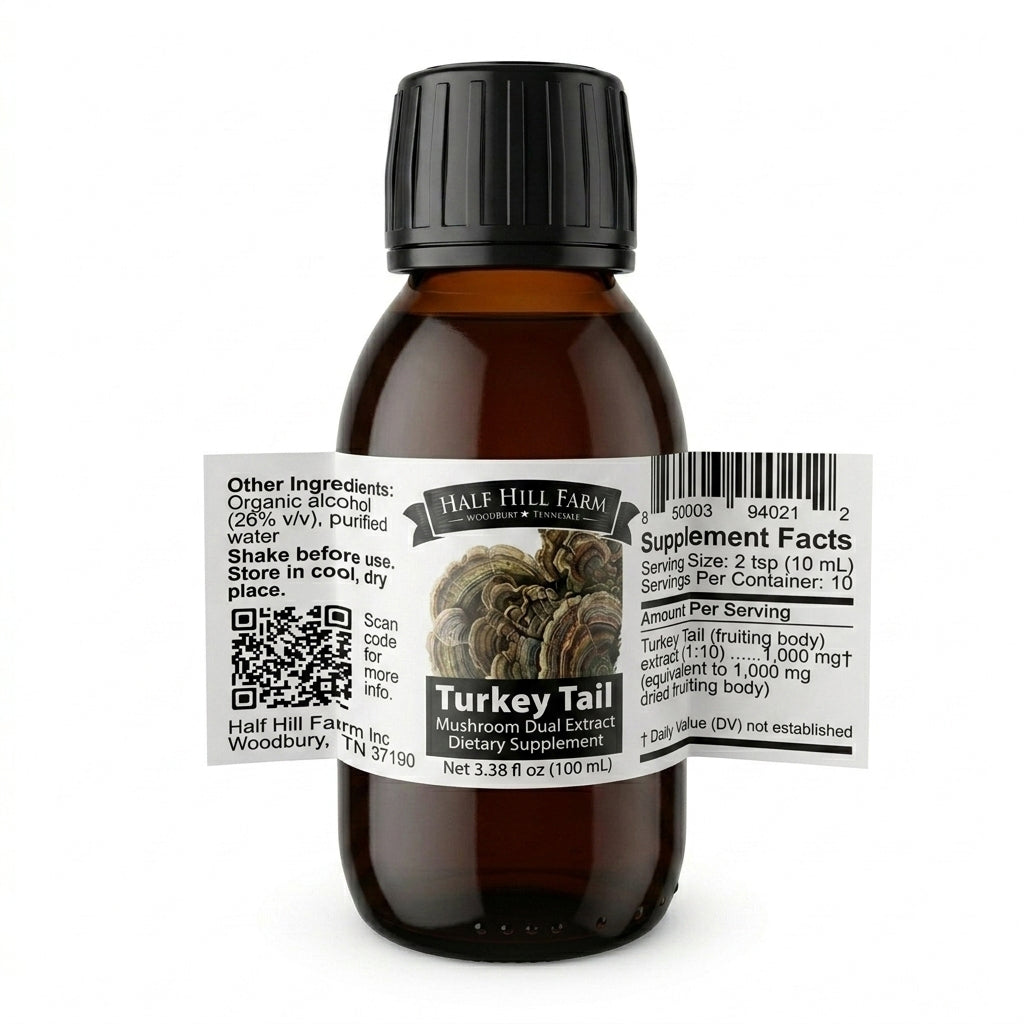
Purity and Extraction Standards: A definitive Turkey Tail extract is defined by its Beta-D-Glucan density. Many commercial products utilize "mycelium on grain," which is harvested before the fungus reaches the bracket stage.
- The Comparison: Because mycelium-on-grain is inseparable from its starch substrate, these products often test as high-starch "fungal food" with Alpha-Glucan levels exceeding 20%.
- The Marker: A pure fruiting body extract should show Alpha-Glucan levels <5% and Beta-Glucan levels >30%, ensuring the extract is 100% fungal tissue rather than grain filler.
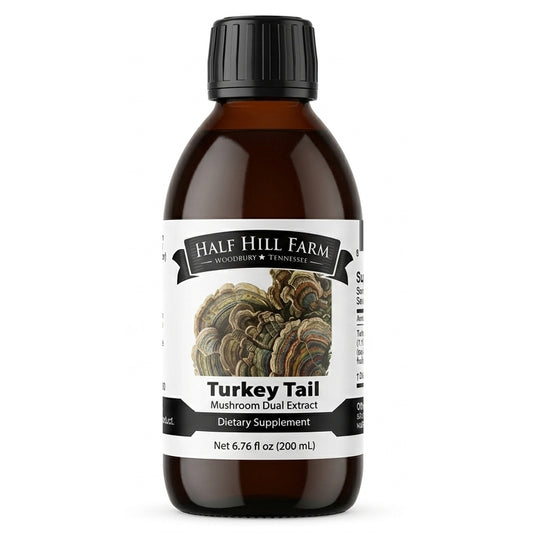
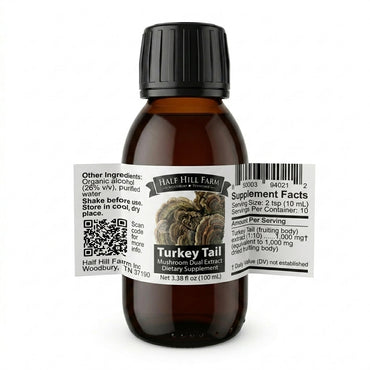
Ways to Consume Turkey Tail Mushroom (Trametes versicolor): Turkey Tail is classified as inedible because of its thin, leathery consistency. In traditional practices, it was often brewed into earthy decoctions. Simply consuming the dried mushroom or a raw powder provides primarily insoluble fiber, as the bioactive protein-bound polysaccharides are locked within a resilient chitinous matrix. For these constituents to be absorbed by the body, the mushroom requires a rigorous hot-water extraction to decrystallize the cell walls. This ensures the fungal chemistry is released from the structural fiber.
Technical Specifications of Turkey Tail Mushrooms
- MycoBank ID: MB#102234
- Microscopy: Spores 5–6 \times 1.5–2 \mu; cylindrical to allantoid, smooth, hyaline.
- Genetic Marker: Species-level identity confirmed via ITS region; 580–610 bp sequence barcoding (clade-specific to T. versicolor).
- Macrochemical: KOH Reaction: Negative/No change on cap.
- Chemotaxonomy: Protein-bound polysaccharides; beta-1,4 glucan backbones.
- Nutritional Mode: Saprobe; White-Rot (Polypore).
- Life Cycle State: Holomorph; Hymenophore (Pore-bearing).
- Purity Marker: Beta-Glucan >30% / Alpha-Glucan <5% (indicates 100% fungal biomass vs. grain-based mycelium).
- Sustainability: Abundant globally. Ethical wild-harvesting supports forest floor health.
*These statements have not been evaluated by the Food and Drug Administration. This product is not intended to diagnose, treat, cure, or prevent any disease.
----------
Christian Grantham is a founder of Half Hill Farm®, maker of functional mushroom dual extracts since 2012.